Showing posts with label Japanese Iris. Show all posts

Tuesday, September 11, 2012

Japanese Iris Bud


Japanese Iris Bud
Iris ensata
(EYE-ris) (en-SA-tuh)
Wordless Wednesday

Sunday, June 10, 2012

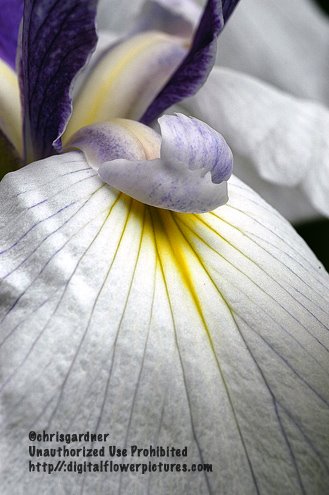
Japanese Iris


Japanese Iris
Iris ensata 'Variegata'
(EYE-ris) (en-SA-tuh)
Synonyms: Iris kaempferi 'Variegata'

The Variegated Japanese Iris is having a stellar year. It seem that some years it doesn’t get any flowers or just a few weak ones. This color purple is not to be ignored. Personally these are my favorite type of Iris and they always seem to find a way into my gardens. All of the other Irises have bloomed (some a couple of months ago) so these can be thought of season extenders for Irises. The flowers are large (one of the biggest in the family) and long lasting. One good thing about Japanese Iris is that it can grow in very moist and boggy conditions. It also grows in part shade but my experience has been crummy vigor and a lack of flowers under shady conditions. This plant has the green and white leaves I think there is one with green and gold leaves too (flowers are light blue).


Since it is once again Sunday here is a bonus snapshot of another Japanese Iris that was blooming yesterday at work. This is a named cultivar that has solid green leaves. I had been watching the almost elaborate unfurling ritual with interest for the last couple of days but was happy to see the flower actually blooming.

Thursday, May 03, 2012

Japanese Iris


Japanese Iris
Iris ensata
(EYE-ris) (en-SA-tuh)

This was the lone flower that we got when dividing some of the Japanese Iris at work last year. I am hoping that they will come back with a vengeance this year. You will usually find this type of Iris tucked into any garden that we build or tend to. While slightly more expensive than bearded or Siberian Iris they are well worth it. I. ensata has the largest flower in the Iris family and is a strong grower.

Speaking of things coming back I was astounded by the fact that many of the annuals we planted in containers in Manhattan last year seemed to overwinter. The Petunias, Superbells and Cannas were all growing strong when we visited the roof top garden yesterday. The Cannas weren't that unusual  but the Marigolds and Petunias were. That is the first time I had seen that in 25+ years of gardening. Nature always has surprises for me but that really floored me.

Sunday, January 16, 2011

Scarlet Avens


Scarlet Avens
Geum 'Mango Lassi'
(JEE-um)

This is a particularly nice variety of the under used perennial Geum. The delicate and complex color shadings add a lot to the border or rock garden. Every flower appears different and has its own mix of red, orange, apricot and peach coloring. They are easy to grow in most soils and can be kept blooming with a little care.


For more flower pictures from around the world check out:
Today’s Flowers . The links open at 1400 GMT.

Today’s bonus flower is some Japanese Iris that were blooming this summer around one of the ponds at work. They are my personal favorite type of Iris. While these white ones are a little unexciting they do come in a lot of nice purples, blues and pinks.

Saturday, June 27, 2009

Japanese Iris

Japanese Iris
Iris ensata ‘Activity’
(EYE-ris) (en-SA-tuh)

The Japanese Iris are blooming. Well they are trying to bloom. There was a really nice dark purple Japanese Iris blooming at work and by the time I got around to taking a picture of it is was getting totally beat up by the rain. I doubt I could’ve captured the richness and vividness of the electric purple color of the flowers even if the weather had been nice. The day before the sun was hitting it and it looked kind of blue, purple and black.

We had a huge line of thunderstorms move through yesterday afternoon. It affected other parts of Connecticut worse than my area in the southwest. I have all the locations of the various gardens I tend to on basically street level radar. If you use weather.com and go to your local area and then the weather in motion link to zoom to US addresses for the radar. So as the storms progressed I could see what was happening at each house.

There was this light pink Japanese Iris blooming at work. It really had the subtlest shadings of color. Its flowers were smaller than the dark purple Iris but still good sized.


The first Japanese Iris picture posted is the cultivar “Activity’. It was blooming at the nursery when I was picking up the Daylilies. I would have bought it but it had actually already almost totally flowered so I couldn’t justify the price. The purple veining on the flower always gets me. It grows to about 30 inches tall.

Japanese Iris has been posted here before. Use the label button to see those posts.

Monday, July 28, 2008

Easter Lily Cactus


Echinopsis sp.
(ek-in-OP-sis)

This Cactus was tagged Echinopsis at Planting Fields. They forgot to include which of 128 species it is. Echinopsis is a genus of Cactus that is native to South America. They range in size from tree-like to small thimble sized types. It is also known as the ‘Sea Urchin’ or 'Easter Lily' Cactus.


This is a Japanese Iris that I shot on July 1st.

Wednesday, September 19, 2007

Japanese Iris for ABC Wednesday

Japanese Iris for ABC Wednesday
Iris ensata
(EYE-ris) (en-SA-tuh)

If you are here for Wordless Wednesday scroll down to the next post.

I originally planned to have Impatiens as my ‘ABC’ photo but I was foiled as when I got to work on Tuesday I found I had forgotten my memory card. Duh! I usually keep extras in the truck but since I have been out shooting a lot they are filled up. The one that I had ‘cleaned’ was sitting on my desk. I might invest in a couple of larger cards so they don’t fill up all the time. Since I do shoot a lot of pictures (shush, I should be working during some of that time) I have to periodically go through my hard drive and get rid of the pictures I am not going to use. That is what happened when I came across this Iris picture. I figure if I haven’t used a picture several months after I shot it then it is toast.

My workflow starts with Adobe® Bridge, which now that I have gotten used to it I love it, and I remove any clunkers from the card. I often pick out the picture I am going to use that day and open it right in Photoshop and then resize it and save it to my hard drive. I have always wanted this blog to be of pictures and plants I shoot in the days before the post, which doesn’t always happen but enough to keep true to the original philosophy. I then download the remaining pictures with Nikon View. That is a pretty worthless program for anything other than a camera/computer interface. Even though I have 3 hard drives in my machine, totaling 344 GB’s I am still sensitive to storage concerns. I don’t want a lot of extra pictures so I try and clean house every so often. I write DVD back ups every two to three weeks.

After I choose a picture I use Photoshop CS2 for any contrast, level and cropping adjustment. I wrote an action that automatically resizes the photo and puts the text watermark on. That saves a lot of time. I save the picture and then upload it through Blogger. It is not as complicated as it sounds once you get used to it. I do try and tweak the process but this way seems about the best for me.

So after all that boring technical stuff let’s get to today’s flower, the Japanese Iris. The Estate I work on has a large collection of these Iris. It is quite a sight when they are all blooming at the end of June and beginning of July. That is a month after the Bearded Iris have bloomed. There are probably 30 or 40 different cultivars. Most are not named or I have forgotten them. I did buy 25 kinds for 25 bucks once and none of them had names but quite a few were very special. If Tall Bearded Iris is the King of Irises I would have to say that the Japanese Iris is the Queen. The colors and size of the flowers are more appealing to me. Some of them are larger than your hand (largest flowers of the Iris family) and I like the way that they are a little flatter that the other Iris. They are easy to grow and withstand normal to very wet conditions. A lot of mine are growing on the edge of the ponds and if you want to remove them for the winter you can grow them in shallow water.


I am going to post this picture of a Rosebud or Double Impatient. It just didn’t come out as well as I had hoped and I had planned to reshoot it yesterday. Impatiens are another flower that I love to grow. The new varieties and types that come out each tear are astounding to me. This one has variegated foliage so it really lights up a shady corner.

Here are some of the other blogs that are participating in ABC Wednesday. If you want to join let me know and I will add your link.

Thursday, July 06, 2006


Japanese Iris (Iris ensata)

I am back from Ireland; we had a great time. The wildflowers alone were worth the trip. I hopefully will be posting a few pictures from the trip in a couple of days. I hope to update this blog at least 2 or 3 times a week. If you would like to subscribe please email me at digitalflowerpictures@yahoo.com. You will have to cut and paste the address as I haven't figured out how to place a link in these entries. If you would like to see some of my other photography my website is http://digitalflowerpictures.com or click on the link at on the right side of the page.

Featured today is one of my favorite perennials. Japanese Iris have the largest flower of any of the Iris. I have seen them 6-7" across! One garden I work in has a nice collection of Japanese Iris. They are breathtaking in the height of the season, which is the end of June. They are native to Eastern Asia and are very hardy. The plant has been in cultivation for ages and has been the focus of subjective breeding for many years. The modern cultivars are the most dramatic, with their Japanese names and seemingly endless variation. Their culture is easy on moist, well drained, acid soil. They grow well on the edge of the pond.