Showing posts with label Wet areas. Show all posts

Sunday, June 10, 2012

Japanese Iris


Japanese Iris
Iris ensata 'Variegata'
(EYE-ris) (en-SA-tuh)
Synonyms: Iris kaempferi 'Variegata'

The Variegated Japanese Iris is having a stellar year. It seem that some years it doesn’t get any flowers or just a few weak ones. This color purple is not to be ignored. Personally these are my favorite type of Iris and they always seem to find a way into my gardens. All of the other Irises have bloomed (some a couple of months ago) so these can be thought of season extenders for Irises. The flowers are large (one of the biggest in the family) and long lasting. One good thing about Japanese Iris is that it can grow in very moist and boggy conditions. It also grows in part shade but my experience has been crummy vigor and a lack of flowers under shady conditions. This plant has the green and white leaves I think there is one with green and gold leaves too (flowers are light blue).


Since it is once again Sunday here is a bonus snapshot of another Japanese Iris that was blooming yesterday at work. This is a named cultivar that has solid green leaves. I had been watching the almost elaborate unfurling ritual with interest for the last couple of days but was happy to see the flower actually blooming.

Saturday, December 22, 2007

Compact Summersweet

Compact Summersweet
Clethra alnifolia 'Compacta'
(KLEE-thra) (al-nee-FOH-lee-uh)
Synonyms: Sweet Pepper Bush, ‘Nana’

There seems to be a lot of varieties of this plant popping up. From what I have seen the selections generally have a better habit and even some flower color (other than white). This has always been an standby plant for me as it can tolerate wet and shady conditions and still put on a good show. It spreads by stolons and can develop quite a large patch if left unattended. That is one reason I have taken to using the smaller versions and cultivars. 'Compacta’ gets up to 3 to 4 feet tall which is quite a bit smaller than the species. I usually do a little trimming in the dormant season to help keep it a little smaller and bushier.

Stolon: Botany: a creeping horizontal plant stem or runner that takes root at points along its length to form new plants.


Here is Santa giving me a personal wave in Manhattan.

Friday, November 30, 2007

Golden Groundsel

Golden Groundsel
Packera obovata
(PAK-er-uh) (ob-oh-VAY-tuh)
Synonyms: Senecio obovatus, Roundleaf Ragwort

I am glad I looked up this plant up before posting as I have always called it Senecio. A little warning on this plant is that it spreads rapidly, almost a little too much so. I have been corralling it right from the start and have enjoyed the cultivation of this groundcover. I haven’t propagated any in the last couple of years but previously I dug up some of the edges and planted them in some very inhospitable places and the funny thing was this plant loved it. In one spot I planted it in rocks and a few really big Oak trees and while that slowed its spread down a little it has done nicely (it is in pretty heavy shade). I was very happy to have something growing in that area. They also are growing in a very moist area that gets wet when the water table is high. That is the patch these pictures are from.


Groundsel blooms in the spring as these pictures were taken in Mid-May. I usually cut the flower stalks off after they are done blooming to tidy it up. It is hardy to USDA Zone 4 and is semi-evergreen in warmer climes. The Japanese Maple is supposed to be ‘Crimson Queen’ but it seems a little nicer then that. I bought three of them at a nursery that was going out of business. I wanted some low grafted trees and they had them out in a field. The idea was to make them into a groundcover type and I have been fairly successful as the trees are now about 1.5 feet tall and 5 to 6 feet wide. You can see the Groundsel actually grew up through the Maple and bloomed, it has since been removed from underneath.


I am posting this picture because although I shot the Groundsel pictures in May and forgot about them I was attracted to this combination I saw at the NYBG in October. It is an Acer palmatum 'Tamukeyama' with what I think is the yellow leaved form of Licorice Plant (Helichrysum petiolare’). . 'Tamukeyama' has been in cultivation since 1710 and is considered one of the oldest cultivars of Japanese Maple. Many experts consider it to be one of the most sun resistant and best at holding its deep leaf color throughout the season.

Sunday, November 04, 2007

Sparkleberry Holly


Sparkleberry Holly
Ilex x ‘Sparkleberry’

This is an interesting deciduous Holly that I have been growing for several years. I always thought it was a cultivar of Winterberry Holly but after looking it up I found out that it is a cross between Finetooth Holly (Ilex serrata) and our native Winterberry or Black Alder (Ilex verticillata). According to my research ‘Sparkleberry’ was the result of a controlled cross between the two plants in 1961 by William Kosar. It came out of the National Arboretum’s plant breeding program with the desire to have the I. serrata’s heavy fruiting characteristics and the adaptability and larger berry size of the Winterberry. From my point of view they were extremely successful.

I have my plants on the edge of the woodland in full sun. They can also tolerate part sun and very wet sites. Although you will get more berries when they are planted in full sun. I don’t have the male pollinator ‘Apollo’ that was developed at the same time. I do have several other male winterberries and have not had a problem with getting fruit on my ‘Sparkleberry’. It just requires a male of either species. These shrubs do get up to about 12 feet tall with a fairly large spread so they need a little room. I prune mine lightly whenever they need it to maintain a nice shape but basically they are very low maintenance. They are hardy to UDSA Zone 5b.


Since when I featured the ‘Little Boo’ white pumpkins on Wordless Wednesday a lot of people wrote that they had never seen a white pumpkin before I thought I would post this image of a full sized one. I took it at the same time as the other picture. I don’t know what variety this is but it much more like a normal sized pumpkin than the ‘Little Boo’, which you can see in the left side of the picture.

Wednesday, October 31, 2007

ABC Wednesday ~ ‘Scarlett O’Hara’ Winterberry Holly


ABC Wednesday ~ ‘Scarlett O’Hara’ Winterberry Holly

Winterberry Holly
Ilex verticillata ‘Scarlett O’Hara’
(EYE-leks) (ver-ti-si-LAH-tuh)
Synonyms: Black Alder

This week brought a wealth of ‘O’ photos. I actually had a few extra that I didn’t use. Those will probably be popping up here and there over the next few weeks. I am the only one that is thinking about next week’s letter right after this post? ‘P’ should be easy. I am thinking of something already.

We pretty much wrapped up the gardening season here this week. Both Monday and Tuesday featured killing frosts. In one way I am sorry to see it go, in another it was a fairly terrible season to grow things around here. We had a late Spring, cool summer, drought in late summer early fall and all that really didn’t add up to a great growing season. I guess some plants liked the conditions and flourished and some didn’t and didn’t do well. All in all Connecticut’s climate is fairly amazing because of the amount of plants that find the conditions to their liking during the season. It is a broad based bunch that hails from around the world. This year a lot of things didn’t thrive like they have in the past. In general I would give the year a 6 out of 10 and that maybe a little generous. As a gardener though I am pretty much an eternal optimist and will be out there again next year, with high hopes.

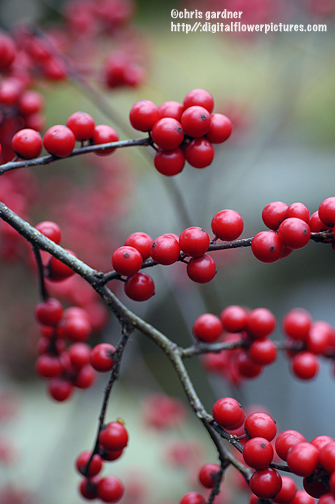
‘Scarlett O’Hara’, which is of course named after the heroine from ‘Gone with the Wind’, is a deciduous Holly. The plant has become quite popular and there are numerous named cultivars available. I hadn’t seen this one before but have been growing some of the others like ‘Winter Red’, ‘Sparkleberry’ and the smaller growing 'Cacapon' and ‘Red Sprite’. The cultivars are better than the species in almost every case. This Northeastern United States native likes moist soil and can grow in wet areas. It also can grow on drier soils but I like to use it in tough areas. The striking berries are really showy when the leaves fall off and the birds like them.


Oxalis vulcanicola “Molten Lava’

This ‘O’ is growing at work in the Conservatory. It is a funny little plant that flowers from time to time. The foliage color is interesting and it doesn’t seem to need much care. I just found out the foliage gets a deeper and richer color in the sun. I will have to move it. If you want to know more about the Wood Sorrels refer to this page of Oxalis.org

and the Wikipedia page on Oxalis


This last ‘O” is for ocular. I took this picture at a local nursery. When I went up there last week they already had the Christmas stuff out!


Here are some of the other blogs that are participating in ABC Wednesday. If you want to join let me know and I will add your link. I took out a few people that haven’t been posting the last couple of weeks. If you want to get back on the list leave a comment. We also have some new people and to them welcome!


Oh yeah, I am sure someone else though about this, ‘O’ is for Orange.

Tuesday, September 25, 2007

New York Aster (Symphyotrichum novi-belgii)

New York Aster
Symphyotrichum novi-belgii
(sim-fy-oh-TRY-kum) (NO-vee BEL-jee-eye)

I saw this Aster at the Vanderbilt Mansion in Hyde Park. It was marked ‘Professor Kippenburg’, however, after a little research I found out that is a blue cultivar and not a deep pink one. So I don’t know the name of this one but it was a colorful little plant that was full of bees. If you ever want to take a couple of photographs of bees just hang around some Asters for a few seconds.


I will always have a sweet spot for Asters. They come on strong in a time of year when just about everything else looks tired. They are easy to grow with the key cultivation factor of watching for Powdery Mildew and other fungus during the year. Good air circulation is a must. I usually pinch all my Asters a couple of times during the season, even the dwarf ones. That allows for a bushy and compact plant, which beats a floppy, stringy plant any day. Asters in general are reliable blasts of color right when you need them. They can tolerate almost wet soil and also grow well in dry soil. They are quite hardy and can take some light frost. Division is an easy way to get new plants and keep the existing clumps healthy. One thing I found out is they are considered a good cut flower.

Symphyotrichum seems to be the ‘new’ genus name for Aster. There are also quite a few botanical synonyms.

My first experiment with the Blogger time stamp was a miserable failure when the post published right away. Sorry about that. For those of you that tuned in to see my Wordless Wednesday post you will have to come back tonight to see it.


This is a weird abstract photo of the Aster. It was a little bit of an accident. I would like to take some more pictures like this that were just a little but clearer. That is something to work on.

Wednesday, September 19, 2007

Japanese Iris for ABC Wednesday

Japanese Iris for ABC Wednesday
Iris ensata
(EYE-ris) (en-SA-tuh)

If you are here for Wordless Wednesday scroll down to the next post.

I originally planned to have Impatiens as my ‘ABC’ photo but I was foiled as when I got to work on Tuesday I found I had forgotten my memory card. Duh! I usually keep extras in the truck but since I have been out shooting a lot they are filled up. The one that I had ‘cleaned’ was sitting on my desk. I might invest in a couple of larger cards so they don’t fill up all the time. Since I do shoot a lot of pictures (shush, I should be working during some of that time) I have to periodically go through my hard drive and get rid of the pictures I am not going to use. That is what happened when I came across this Iris picture. I figure if I haven’t used a picture several months after I shot it then it is toast.

My workflow starts with Adobe® Bridge, which now that I have gotten used to it I love it, and I remove any clunkers from the card. I often pick out the picture I am going to use that day and open it right in Photoshop and then resize it and save it to my hard drive. I have always wanted this blog to be of pictures and plants I shoot in the days before the post, which doesn’t always happen but enough to keep true to the original philosophy. I then download the remaining pictures with Nikon View. That is a pretty worthless program for anything other than a camera/computer interface. Even though I have 3 hard drives in my machine, totaling 344 GB’s I am still sensitive to storage concerns. I don’t want a lot of extra pictures so I try and clean house every so often. I write DVD back ups every two to three weeks.

After I choose a picture I use Photoshop CS2 for any contrast, level and cropping adjustment. I wrote an action that automatically resizes the photo and puts the text watermark on. That saves a lot of time. I save the picture and then upload it through Blogger. It is not as complicated as it sounds once you get used to it. I do try and tweak the process but this way seems about the best for me.

So after all that boring technical stuff let’s get to today’s flower, the Japanese Iris. The Estate I work on has a large collection of these Iris. It is quite a sight when they are all blooming at the end of June and beginning of July. That is a month after the Bearded Iris have bloomed. There are probably 30 or 40 different cultivars. Most are not named or I have forgotten them. I did buy 25 kinds for 25 bucks once and none of them had names but quite a few were very special. If Tall Bearded Iris is the King of Irises I would have to say that the Japanese Iris is the Queen. The colors and size of the flowers are more appealing to me. Some of them are larger than your hand (largest flowers of the Iris family) and I like the way that they are a little flatter that the other Iris. They are easy to grow and withstand normal to very wet conditions. A lot of mine are growing on the edge of the ponds and if you want to remove them for the winter you can grow them in shallow water.


I am going to post this picture of a Rosebud or Double Impatient. It just didn’t come out as well as I had hoped and I had planned to reshoot it yesterday. Impatiens are another flower that I love to grow. The new varieties and types that come out each tear are astounding to me. This one has variegated foliage so it really lights up a shady corner.

Here are some of the other blogs that are participating in ABC Wednesday. If you want to join let me know and I will add your link.

Thursday, September 06, 2007

Great Blue Lobelia (Lobelia siphilitica)


Great Blue Lobelia
Lobelia siphilitica
(low-BEE-lee-uh) (sigh-fy-LY-tih-kuh)
Lobeliaceae
Synonyms: High Belia, Louisiana Lobelia, Blue Cardinal Flower

I bought one pot of this plant 20 years ago at a plant sale and have been battling it ever since. It is a beautiful color blue but I have had problems with it seeding too much. I finally have contained it to a small area of the island garden and have actually grown to like it. I am not sure if it is a short lived perennial or a biennial but the seedlings seem to flower the first year. It grows fairly tall (up to 3 feet) and is hardy to USDA Zone 5, at least with reports of it surviving in Zone 3. All in all I guess I would recommend it but not for the real tidy garden. More for a moist to wet area that you want a bit more of a wild appearance. I think it would look wonderful in a mass planting. This Eastern United States native likes a little shade in hot areas.


There seems to be a little variation in the color of the flower. Mine are this rich blue but there are purple and white versions. This plant’s species name, siphilitica, refers to its use by early Americans as a treatment for venereal disease.

The work never seems to stop in Manhattan.

Monday, July 30, 2007

Gooseneck Loosestrife (Lysimachia clethroides)


Gooseneck Loosestrife
Lysimachia clethroides
(ly-si-MAK-ee-uh) (klee-THROY-deez)
Primulaceae

This plant isn’t for everybody. It is way too invasive to be used as an everyday garden plant. It is good for certain areas where it can be allowed to spread. It isn’t good for borders, rich topsoil areas, areas adjacent to lawns and small gardens in general. My plants are in a rock planter but I still have to keep a careful eye on it. It is a really wet area and it can’t spread in two directions. I usually pull up any runners that are going outside their area a couple of times a year. I don’t have any mercy for them and I never plant them anywhere else in the garden or throw them in the compost. The flowers are attractive and a bit novel and they appear in summer when I welcome the color. I also love the fall color of this perennial. It is a great mixture of red, yellow and orange, really super. Carefully consider using this plant and if you don’t have the time or urge to maintain it get something else.

This week I am continuing the pruning job I started on Friday. It is a nice garden but it has been let to run amok a bit. I am removing some plants and severely cutting back others. After that we are going to do some planting. I want to see what it looks like when it is all cut back. I have become a real journeyman with dealing with mature gardens. There is definitely a whole different approach you have to use as compared to getting a garden established.

Tuesday, July 24, 2007

Meadowsweet (Filipendula 'Kakome')


Meadowsweet
Filipendula 'Kakome'
(fil-ih-PEN-dyoo-luh)
Synonyms: Double Meadow-sweet, Dwarf Meadowsweet, 'Kahome'

I took these pictures at the nursery in Long Island though I have been growing this plant for several years. I have it sited in a part shade moist area and it seems very happy. I know it can grow in almost wet conditions also. I like it better than Queen of the Prairie (Filipendula rubra) and Queen of the Meadow (Filipendula ulmaria) mainly because it is a dwarf form (12 inches) that doesn’t flop or sprawl. It has been in the garden a long time and hasn’t needed to be divided yet. The flower and foliage color is good and it has shown deer resistance. The flowers are corymbs that look a lot like Astilbe.


Here are a couple more pictures from the ferry. There were two Jet-skis that were putting on a show riding up the wake of the ferry. It was better entertainment than the usual feeding Doritos® to the sea gulls. To be fair I wanted to post the power plant that is on the Port Jefferson side of the ferry trip.


Monday, July 09, 2007

Summer Blooming Azalea (Rhododendron ‘Golden Showers’)


Summer Blooming Azalea
Rhododendron ‘Golden Showers’

I am always surprised that more people don’t grow these wonderful plants. At least a couple always sneak into any garden I design and build, since they are a fantastic way to extend the Azalea season. Their fragrant and colorful blooms come at a time in the garden when I can use the color. Here is a link and excerpt from a page describing these plants:

“Throughout his life, Ed Mezitt explored the possibilities for expanding the seasons of color in the New England landscape. In the 1940s, he began selecting and propagating the more colorful individuals from seed-grown populations of the native plants grown in his parents’ nursery. The major catalyst to his breeding of the Summer Azaleas occurred in the 1950s when he discovered plants of the brightly colored Cumberland and Plumleaf Azaleas, both of which are native to the southern U.S. Like their New England counterparts, these plants flowered in June and July. Although they lacked fragrance, their intense orange, yellow, and red hues offered the possibility for adding a wider range of flower color when hybridized with the native ones.

The June-flowering results of this program include the fragrant, pink flowering ‘Lollipop,’ with its bronze-green new growth and ‘Pink and Sweet,’ which has become one of the most popular. ‘Weston’s Innocence’ is fragrant, pure white in flower, and its foliage becomes a colorful bronzy green in summer. The cultivar ‘Popcorn’ has profuse white flowers with distinctive yellow throats and a fragrance as intense as its native parent. ‘Ribbon Candy’ has spicy-scented pink flowers, each with a distinct white stripe that imparts a unique bicolor effect.”


Written by: R. Wayne Mezitt who is the chairman of Weston Nurseries of Hopkinton, MA.

The rest of the article can be found here:
Article

I like all the varieties mentioned in the article but this one is my favorite because of the multicolored hues of the flowers. They seem to be able to take pretty wet conditions as I have some planted at the edge of one of the ponds on the Estate. The plant pictured is actually in a wide foundation planting at another garden. It has grown to about 6 feet and was originally in a group of three. I moved two of them last year as they were getting a little clustered and you can see that it came through it very well. I keep them well fertilized and that just adds to the glossy deep green of the foliage.


See what I mean about the foliage. It adds a nice backdrop for the flowers.

Monday, May 14, 2007

Camassia (Camassia leichtlinii)


Camassia
Camassia leichtlinii
(kuh-MAS-ee-uh) (leekt-LIN-ee-eye)
Agavaceae

Wow I have a full plate today, I am going to try and finish a job in Darien today but realistically I probably won’t finish until noon tomorrow. I have to pick someone up at Newark Airport around 10 pm tonight. I had better get a nap when I get home. At least I finished everything I wanted to around the house yesterday.

Today’s plant is one of the few bulbs I know that will grow in a wet area. The flowers are lovely as are the buds and foliage. My little group of a hundred has multiplied over and over again through the years. Since I don’t have much time this morning here is a Wikipedia link to Camassia.


Synonyms: Camas, Quamash, Indian Hyacinth, and Wild Hyacinth

Friday, February 02, 2007

Double Daylily 'Moses Fire’


Double Daylily 'Moses Fire’
Hemerocallis

I forgot I had taken this picture this summer. I happened to see this at my local retail garden center. They really do a nice job on finding unusual cultivars of things. They always have some nice Daylilies. This one is was really unusual and had the most petals I have seen on a Daylily flower. While looking this up I came across this Daylily Auction Site . It looks like you could live out your daylily fantasies for a long time over there. I did see a lot of double flowered varieties on that site so this isn’t that unusual. That is one of things I enjoy about gardening, you can always find something new and wondrous. It still hasn’t lost its appeal to me.

I don’t grow as many Daylilies as I wish. Mostly because of the fact that the deer love them. I did plant some nice cultivars last spring and I am eager to see what they look this year after having a full year to get established. With the proliferation of the re-bloomers my other little knock against them is gone. That the flower cycle didn’t last long enough. One thing I have found them to very good for is stabilization of hillsides. They can grow on the side of a cliff, practically. Once they are established there is no more soil erosion. When I visited the Botanical Gardens in New Brunswick, Canada last August they had a really nice Daylily collection. I was surprised to see them growing along the stream and in a wet area. I will have to try that.

Tuesday, November 21, 2006

Dwarf Sweetgum (Liquidambar styraciflua ’Gumball’)


Dwarf Sweetgum
Liquidambar styraciflua ’Gumball’
(lih-kwid-AM-bar) (sty-rak-ee-FLOO-uh)

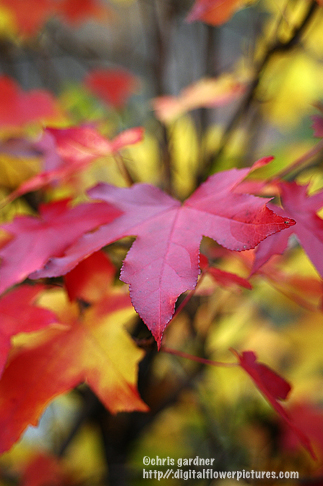
This is a funny little tree. I sometimes think that large parts of it are dead in the spring. I have learned to have patience with it as it usually fills in nicely. My tree has remained very short, about 7 feet in 10 years, compared to the species, which can get 90 feet tall. ‘Gumball’ has a very tight and twiggy branching pattern and it does remain very round. Mine is grafted on a standard about 3 feet off the ground. It doesn’t seem to produce those annoying seedpods. If you are looking for an unusual dwarf tree this might be your ticket. Mine is planted next to a pond spillway and hasn’t had any detriment from the wet soil (the spillway leaks a little).

The species is definitely worth considering if you have a large area for a tree. The star shaped maple-like foliage is glossy green and turns a beautiful mix of color in the fall. This tree can easily be mistaken for a Maple, however Liquidambar leaves are alternate. Something I learned when I looked this tree up is that it has aromatic foliage that smell like camphor. I guess I will have to wait until next year to check that out. The bark can develop a nice corky winged appearance. The wood is used for several commercial purposes including being an important ingredient in plywood. According to Wikipedia “The trees yield a gum known as storax, used in herbal medicine. This gum contains a small amount of the aromatic hydrocarbon styrene; the styrene extracted from Liquidambar orientalis gum resulted in the discovery in 1839 of the first known polymer polystyrene.”

I have been growing another cultivar called 'Rotundiloba'. It seems like a nice tree but hasn’t grown much. The leaves are rounded and it exhibits the same fall color as the species. It is said not to produce the spiky (they look like little mace heads) seedpods.

I got the estimate on my camera today. It is $200 to repair, which is a little more than I thought, but still well within the worthwhile range. The camera shorted out when Karen inserted the flash card the wrong way (on the Coolpix 8400 you have to put in upside down). I will post the name of the company fixing it when I get it back. So far they seem very efficient. I missed the camera the other day when I was in NYC. I find a Point and Shoot to be better for taking pictures down there. It is going to take 5-7 days to fix, which is a fast turn around.
(Synonym: Redgum)

Sunday, November 19, 2006

Dwarf Fothergilla (Fothergilla gardenenii)


Dwarf Fothergilla
Fothergilla gardenenii
(foth-er-GIL-luh) (gar-DEN-ee-eye)

This is one of my favorite under used shrubs. This one is the dwarf form but Large Fothergilla (Fothergilla major) is just as nice. The white bottlebrush flowers in the spring are pretty and have an unusual texture and are fragrant. The real show is the awesome red, yellow, orange and purple fall color.

Fothergilla likes to grow in part shade to full sun. It accepts moist to wet soil that must be acidic. This native to the Southeastern United States is a slow grower to about 4 feet. It sometimes times takes awhile to get going but after that it is long lived and trouble free. A very versatile shrub that can be used in mixed shrub borders, the woodland garden and even foundation plantings.

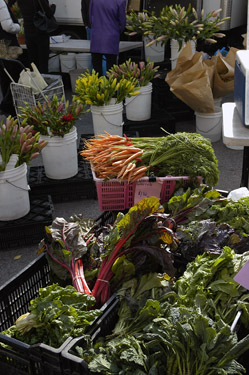
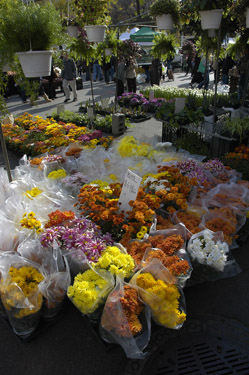
I was in Manhattan yesterday dropping off the camera that Karen broke. I know she didn’t mean to break it. I was a little sad at handing over the camera at the repair store on 13th Street. They didn’t think it was going to be a big deal to fix, which was good news. Everything was so crowded in the city that it was difficult to get any pictures. I visited the Green Market in Union Square and that was interesting. They had some unusual things and I could see why the native New Yorkers were swarming the place.

I am working today since it is going to be a short week with the holiday. I am not complaining there will be plenty of rest coming up during the winter.

(Synonym: Dwarf Witch Alder)

Here are a couple snapshots from the market.


Friday, November 17, 2006

Possumhaw (Ilex decidua ‘Warren’s Red’)


Possumhaw
Ilex decidua ‘Warren’s Red’
(EYE-lecks) (dee-SID-yoo-uh)

This plant never fails to deliver a good crop of brightly colored berries. It is not exceptional during the summer but it isn’t bad looking either. ‘Warren’s Red’ was discovered as a sport at Otis Warren and Son Nursery in Oklahoma City. It grows much smaller than the species. Mine has been growing at the side of a man-made pond for several years so it tolerates wet soil. It is about 5 feet tall and 4 or 5 feet wide, which is smaller than the listed size. I never have had to prune it. It is growing next to a planting of Red and Yellow Twig Dogwood that didn’t turn out the way I wanted. As a matter of fact I decided to remove them yesterday. I hope to get a few more ‘Warren’s Red ‘ to replace them. It looks similar to Winterberry Holly but seems to hold its foliage a bit longer. It seems like it gets a heavier crop of berries every year, which my Winterberries don’t always do.


(Synonyms: Possum Haw Holly, Deciduous Holly, Ilex decidua var. curtissii)

Saturday, October 21, 2006

Winter Gold Winterberry Holly (Ilex verticillata 'Winter Gold')


Winter Gold Winterberry Holly
Ilex verticillata 'Winter Gold'
(EYE-lecks) (ver-ti-si-LAH-tuh)

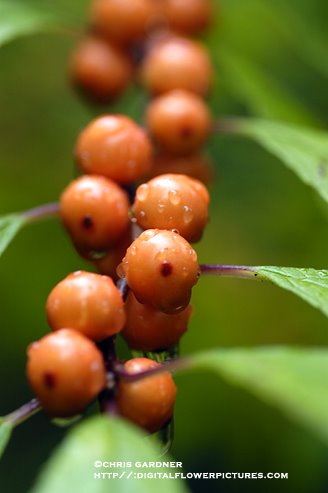
I bought his plant as ‘Winter Gold’ although my friend swears it is sub-species of Winterberry that I have forgotten the name of. Whatever it is a great plant and adds a little zip to the Winterberry collection at one of the large gardens I take of. This plant is easy to grow and will tolerate moist to wet conditions. Most people’s first guess would not be holly because it is deciduous and spineless. I have been keeping ‘Winter Gold’ at about 6 feet though it seems to want to get a little taller. There is always a good crop of berries and the foliage remains clean throughout the season. I took pictures of some of the other Winterberry Holly that I will be posting next week.

I have to go out and see what last night’s high winds did to the gardens. Hopefully not too much but 50 miles per hour with a leaf load may have been too much. I am not sure why some of the color washes out on Blogger but these berries are a darker shade of orange!

(Synonyms: Black Alder, Michigan holly, Common Winterberry)

Wednesday, August 16, 2006


Cutleaf Coneflower
Rudbeckia laciniata 'Herbstsonne'
(rud-BEK-ee-uh) (la-sin-ee-AY-tuh)


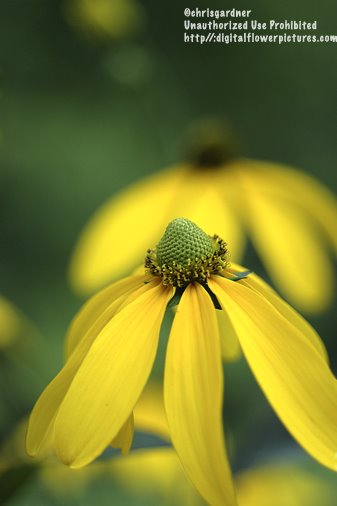
This is a great plant for the back of the border. I must admit I am having a torrid love affair with the genus Rudbeckia. They are so giving without being demanding. This particular type is very tall but doesn’t need staking, a big plus to me. It really doesn’t need much care at all. It always seems to come back and bloom heavily. My initial experience with it was in a wet area and that worked well. I have since used in a couple of the other borders. You have to like yellow though. One of this plants other common names is Wild Golden-Glow. It is a bright intense yellow and I think it stands out even more because of its height (which is about 6’). With pruning off the spent flowers it can easily bloom well into September and even to frost.

Saturday, August 12, 2006


Dwarf Giant Banana
Musa acuminata 'Enano Gigante'
(MEW-suh) (ah-kew-min-AY-tuh)

A wonderful foliage accent for the summer garden this dwarf banana is fun to grow. They have a stately tropical appearance and are easy to care for. I have heard the juvenile leaves are splotched with red but I haven’t noticed that. The adult leaves are all green. Banana is the fourth largest fruit crop in the world and is grown in every tropical region. I like the dwarf types, as they are less likely to sustain wind damage and in general are more manageable. I always bring them into the conservatory in the winter and a couple of times actually had fruit.

It’s Saturday and I have to work. Oh well, I guess it could be worse. The weather has cooled down nicely and it is again a pleasure to be outside. We could use some sustained rain here now. The wet spring and early summer is just a memory now. I am planning my week and it looks like some more perennial planting and a big sod job. Sod is a lot of work but you do get instant gratification something us gardeners don’t always get to enjoy.

Thursday, August 03, 2006


Pink Summersweet
Clethra alnifolia 'Ruby Spice'
(KLEE-thra) (al-nee-FOH-lee-uh)

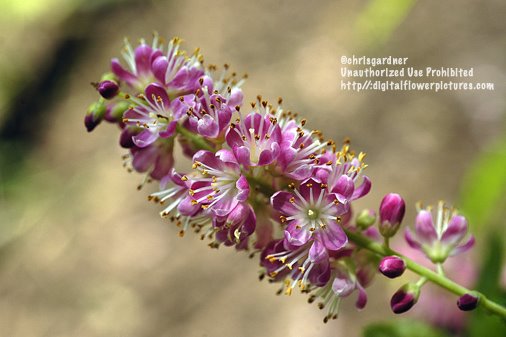
Clethra is a good, easy to grow plant. ‘Ruby Spice’ is a superior cultivar in just about every way. It grows shorter and more compact than most of the others. Add in the glossy dark green foliage, beautiful flower color and a strong fragrance, and it really outdistances the competition.

Clethra can be a bit of a problem solver in the landscape. It tolerates a wide range of conditions, including wet areas. It is happiest in a moist part-shade. I added a couple of ‘Ruby Spice’ to a new perennial border that I am installing. It is blooming now and we were all captivated by it’s charm.