Sunday, November 26, 2006

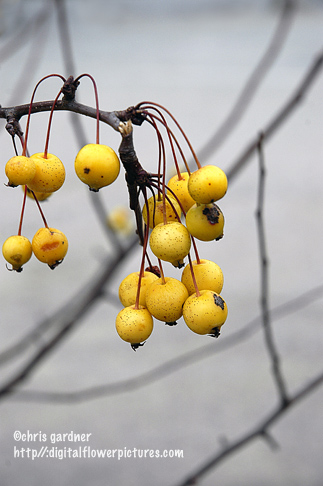
Harvest Gold Crabapple (Malus x ‘Harvest Gold’)


Harvest Gold Crabapple
(Malus x ‘Harvest Gold’)

Growing Crabapples is always a mixed bag for me. If the conditions are right they are one of the most beautiful flowering trees in this area. Often times the conditions are not right and you end up with a fungus and insect ridden tree. This doesn’t seem to affect the growth or life of the tree. Selection of a disease resistant type is paramount to your being happy with your Crabapple. I think siting the tree is another important element. It is fine for the field or the end of a border but I will not plant them as a specimen lawn tree. Another thing that happens to Crabapples is when they are blooming if there are heavy rains the flowers all turn to a brown mush. The fruit is nice but the birds often get it fast. It is persistent when left by the birds.

I haven’t grown M. x ‘Harvest Gold’ as this picture was shot in someone else’s garden. They have been happy with its performance. It has white flowers, yellow apples and grows to 25 feet. The soft red pedicels are a nice contrast to the yellow fruit. This particular tree was about 15 feet with a good branching structure and a good crop of the apples.

Saturday, November 25, 2006

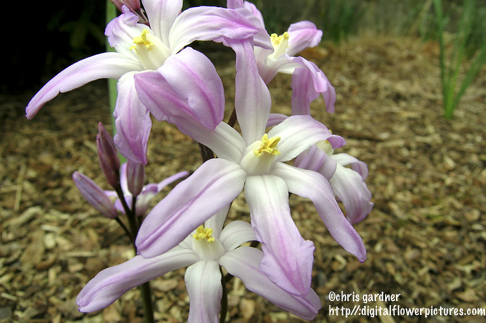
Pink Glory of the Snow (Chionodoxa forbesii 'Pink Giant')


Pink Glory of the Snow
Chionodoxa forbesii 'Pink Giant'
(kye-oh-no-DOKS-uh) (FORBZ-ee-eye)

I have been going through a lot of spring pictures for submission to a publisher. This one ties in to this time of year because you need to plant the bulbs in the fall. It is a great bulb for naturalizing or for the rock garden and as one website described a ‘socks and shoes’ plant for taller daffodils. These bulbs are also a good companion to the smaller botanical type Tulips. They are extremely hardy and seem to return every year with little fuss. They multiply by seeding and that seems to work out well. Chionodoxa bloom very early and the show lasts quite a long time. The white form ‘Alba’ and another species (Chionodoxa luciliae), which produces smaller blue flower, are a wonderful addition to the early spring garden.

Friday, November 24, 2006

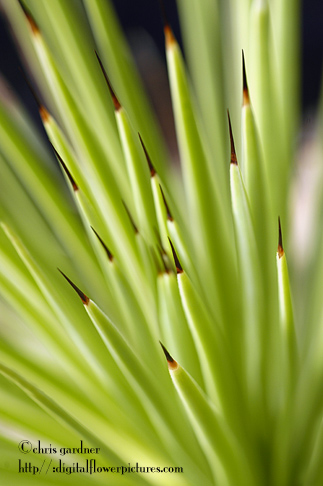
Hedgehog Agave (Agave stricta)


Hedgehog Agave
Agave stricta
(a-GAH-vee) (STRIK-tuh)

This picture was taken at a friend’s greenhouse. He just got this plant and it is quite handsome. It grows in the wilds of Central Mexico and gradually spreads with rosettes, forming a patch. That is not going to happen in the greenhouse as it is in an 8-inch pot. It sure does have a ‘sharp’ look about it. The slender leaves all form a sharp black point. One thing I like about the Agaves I have seen is they seem to grow with kind of a symmetrical habit. I will have to see if the six-foot flower stalks will emerge from this one. He will have to support it somehow as it could never stand up in its present pot. I think flowering for most Agaves end the plants life, which makes it monocarpic.

We got several inches of rain here yesterday. It seems like today is going to be nice, so maybe I will get the camera out. It is getting harder and harder to find flowers to shoot. There are a few odd mums left and I saw some other flowers at work including Potentilla, Mello Yellow Spirea and some Dianthus. They just seem to be sporadic flowers that a freeze will surely cut down.

(Synonyms: Agave striata)

Wednesday, November 22, 2006

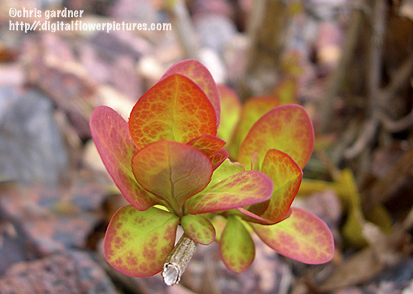
Golden Barberry (Berberis 'Golden Carousel')


Golden Barberry
Berberis 'Golden Carousel'
(BEAR-ber-is)

This is actually a spring picture. I have been going through the archives because someone contacted me about possibly using some spring flower shots. I found several that I never processed and have been scouring my hard drives for some other appropriate material. One thing I love about digital flower photography is you can see right when you took the picture. Among other things I have been searching by date for any files created in April and May. I could see all the dates that took pictures this spring. It seemed like I was getting out with the camera every four or five days.

I think this is part of the ‘Carousel’ series of Barberries (along with ‘Ruby Carousel’ and ‘Emerald Carousel’). This cultivar is a fantastic plant that has dramatic new growth. These flowers could probably be called insignificant, as they are really small and a little hidden along the branches. They are plentiful and pretty and add a bit to the general color of the plant. The fall color is quite good, also. I saw some people were recommending part shade but mine is in full sun here in Connecticut. It never seems to get too big which is a nice attribute and has a little less coarseness than some of the other Barberry.

Here is a snapshot of the new growth.

Tuesday, November 21, 2006

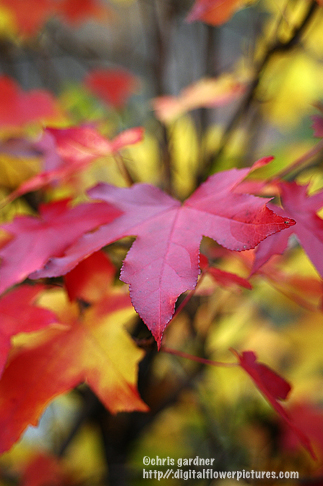
Dwarf Sweetgum (Liquidambar styraciflua ’Gumball’)


Dwarf Sweetgum
Liquidambar styraciflua ’Gumball’
(lih-kwid-AM-bar) (sty-rak-ee-FLOO-uh)

This is a funny little tree. I sometimes think that large parts of it are dead in the spring. I have learned to have patience with it as it usually fills in nicely. My tree has remained very short, about 7 feet in 10 years, compared to the species, which can get 90 feet tall. ‘Gumball’ has a very tight and twiggy branching pattern and it does remain very round. Mine is grafted on a standard about 3 feet off the ground. It doesn’t seem to produce those annoying seedpods. If you are looking for an unusual dwarf tree this might be your ticket. Mine is planted next to a pond spillway and hasn’t had any detriment from the wet soil (the spillway leaks a little).

The species is definitely worth considering if you have a large area for a tree. The star shaped maple-like foliage is glossy green and turns a beautiful mix of color in the fall. This tree can easily be mistaken for a Maple, however Liquidambar leaves are alternate. Something I learned when I looked this tree up is that it has aromatic foliage that smell like camphor. I guess I will have to wait until next year to check that out. The bark can develop a nice corky winged appearance. The wood is used for several commercial purposes including being an important ingredient in plywood. According to Wikipedia “The trees yield a gum known as storax, used in herbal medicine. This gum contains a small amount of the aromatic hydrocarbon styrene; the styrene extracted from Liquidambar orientalis gum resulted in the discovery in 1839 of the first known polymer polystyrene.”

I have been growing another cultivar called 'Rotundiloba'. It seems like a nice tree but hasn’t grown much. The leaves are rounded and it exhibits the same fall color as the species. It is said not to produce the spiky (they look like little mace heads) seedpods.

I got the estimate on my camera today. It is $200 to repair, which is a little more than I thought, but still well within the worthwhile range. The camera shorted out when Karen inserted the flash card the wrong way (on the Coolpix 8400 you have to put in upside down). I will post the name of the company fixing it when I get it back. So far they seem very efficient. I missed the camera the other day when I was in NYC. I find a Point and Shoot to be better for taking pictures down there. It is going to take 5-7 days to fix, which is a fast turn around.

(Synonym: Redgum)

Monday, November 20, 2006

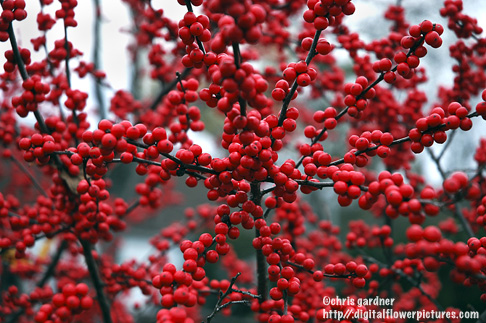
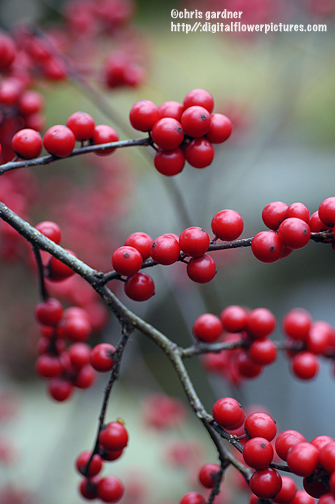
"Winter Red' Winterberry Holly


Winterberry Holly
Ilex verticillata 'Winter Red'
(EYE-lecks) (ver-ti-si-LAH-tuh)

My Winterberry Holly never seem to quite end up with as many berries as this specimen I saw at Rosedale Nurseries in Westchester County. I am not sure why, maybe because some of them are growing in part shade. Even if you don’t have this many berries it is still a nice plant to grow. On 10/21 I posted a shot of ‘Winter Gold’ Winterberry and they always seem to have a heavier crop of berries than my ‘Winter Red’. This is probably related to something I am unintentionally doing and I haven’t been able to figure it out.

I am not looking forward to this week. I have six days of work planned and only three days to do it. Last night when I took the garbage out there was a rain and snow mixture, and that doesn’t bode well for all the clean up and other work I have to do. I guess it is time to pay for all those nice temperatures we have been having the last couple of weeks.

Sunday, November 19, 2006

Dwarf Fothergilla (Fothergilla gardenenii)


Dwarf Fothergilla
Fothergilla gardenenii
(foth-er-GIL-luh) (gar-DEN-ee-eye)

This is one of my favorite under used shrubs. This one is the dwarf form but Large Fothergilla (Fothergilla major) is just as nice. The white bottlebrush flowers in the spring are pretty and have an unusual texture and are fragrant. The real show is the awesome red, yellow, orange and purple fall color.

Fothergilla likes to grow in part shade to full sun. It accepts moist to wet soil that must be acidic. This native to the Southeastern United States is a slow grower to about 4 feet. It sometimes times takes awhile to get going but after that it is long lived and trouble free. A very versatile shrub that can be used in mixed shrub borders, the woodland garden and even foundation plantings.

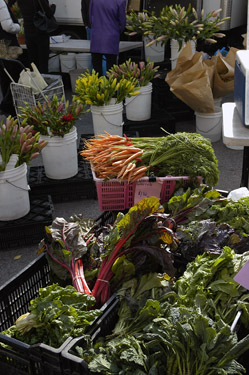
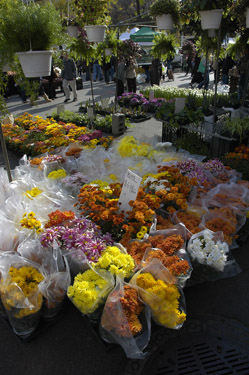
I was in Manhattan yesterday dropping off the camera that Karen broke. I know she didn’t mean to break it. I was a little sad at handing over the camera at the repair store on 13th Street. They didn’t think it was going to be a big deal to fix, which was good news. Everything was so crowded in the city that it was difficult to get any pictures. I visited the Green Market in Union Square and that was interesting. They had some unusual things and I could see why the native New Yorkers were swarming the place.

I am working today since it is going to be a short week with the holiday. I am not complaining there will be plenty of rest coming up during the winter.

(Synonym: Dwarf Witch Alder)

Here are a couple snapshots from the market.


Friday, November 17, 2006

Possumhaw (Ilex decidua ‘Warren’s Red’)


Possumhaw
Ilex decidua ‘Warren’s Red’
(EYE-lecks) (dee-SID-yoo-uh)

This plant never fails to deliver a good crop of brightly colored berries. It is not exceptional during the summer but it isn’t bad looking either. ‘Warren’s Red’ was discovered as a sport at Otis Warren and Son Nursery in Oklahoma City. It grows much smaller than the species. Mine has been growing at the side of a man-made pond for several years so it tolerates wet soil. It is about 5 feet tall and 4 or 5 feet wide, which is smaller than the listed size. I never have had to prune it. It is growing next to a planting of Red and Yellow Twig Dogwood that didn’t turn out the way I wanted. As a matter of fact I decided to remove them yesterday. I hope to get a few more ‘Warren’s Red ‘ to replace them. It looks similar to Winterberry Holly but seems to hold its foliage a bit longer. It seems like it gets a heavier crop of berries every year, which my Winterberries don’t always do.


(Synonyms: Possum Haw Holly, Deciduous Holly, Ilex decidua var. curtissii)

Thursday, November 16, 2006

Digital Clematis


Digital Clematis

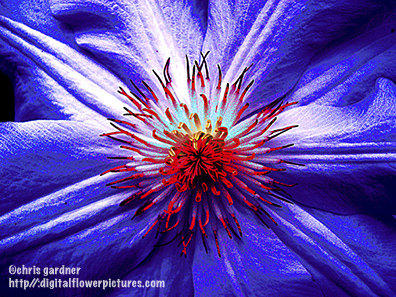
This picture was totally useless until I ran it through Photoshop. With some selective/replace color and some sharpening this is what I came up with. I use a Mac G4 Quicksilver tower and Adobe CS2 Suite. I could play around with it for hours, as there are so many ways to manipulate an image.

Just a short post because I am tired. I planted another 400 tulips yesterday and it wasn’t easy digging. Should look nice though in the spring. With the time change, anxiety of the end of the season, and the amount of work that has to be done, it all adds up to a lot of stress. If I can just knock off a few of the things from my list I will feel a lot better.

Wednesday, November 15, 2006

Lily of the Valley (Convallaria majalis)


Lily of the Valley
Convallaria majalis
(kon-vuh-LAIR-ee-uh) (maj-AY-liss)

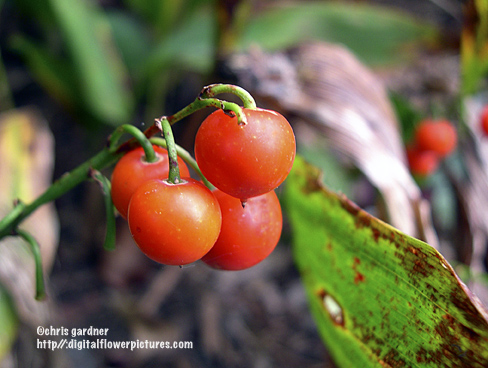
Berry pictures are always a bit of a stumbling block for me. Usually the light is either too bright or too dark. I keep trying though and while I have gotten a little better there is still a long way to go. I think using a tripod might be helpful. 90% of my flower shots are handheld. Using a tripod is a little cumbersome in the garden sometimes. Take this shot; I was down on my knees as these berries were only about 6 inches tall. It is a little frustrating to keep trying a subject that isn’t cooperative but it is also rewarding when you do get the picture.

Lily of the Valley is a beautiful fragrant groundcover that can grow in sun or shade. I use it mainly in the shade, as kind of a problem solver sometimes. I have been growing the Pink Form and it doesn’t seem to multiply as fast as the white but it is an interesting novelty. I had never seen these berries before and from some research I found out they don’t always mature. They each contain one seed but the best way to propagate it is to dig some of the ‘pips’ up. Speaking of groundcovers when I was at work the other day I was looking at an area that had kind of naturalized. I had been transplanting in little bits of groundcovers and shrubs for kind of a modified woodland garden. Anyway I was looking under an Azalea and I noticed a patch of ground where Pachysandra, Myrtle (Vinca minor), Lily of the Valley and Bishop’s Weed (Aegopodium podograria), had met up. It looked like a little Carpet Bugle (Ajuga) in there too. I will be watching to see what happens. That is kind of thing that sometimes happens when, over the years, you keep layering plants in.

There are quite a few legends associated with Lily of the Valley. It has been used medicinally though all parts of the plant are considered poisonous.

(Synonym: May Bells, Our Lady's Tears, Ladder to Heaven, Jacob's Tears)

Tuesday, November 14, 2006

Korean Chrysanthemum


Korean Chrysanthemum
Chrysanthemum NYBG Series ‘Straw’
(kris-AN-the-mum)

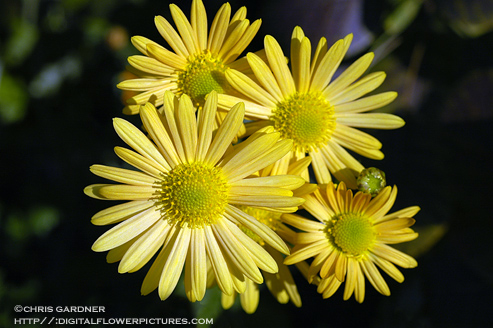
This was taken at the NYBG. It is one of several mums that were named ‘NYBG Series’. All were named after their color. This one is ‘Straw’ and ‘Lavender’, ‘Sienna’ and ‘Mustard’ were some of the other cultivar names. I was glad to see them blooming as the mums have pretty much finished up here in Connecticut.

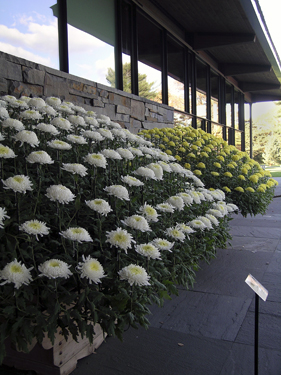
Next year they are going to have a big Chrysanthemum exhibit at the New York Botanical Garden. This was set up near the entrance and illustrates the fabulous ‘ozurukri’ Japanese method of growing mums. These are single plants each grown from a single cutting. The white one was named ‘Moon at the Base of the Mountain and the yellow one was called ‘Sun at the Base of the Mountain’. They were very, very impressive. Can’t wait.

Monday, November 13, 2006

Heavenly Bamboo (Nandina domestica)


Heavenly Bamboo
Nandina domestica
(nan-DEE-nuh) (doh-MESS-tik-uh)

This plant does well in Southern Connecticut gardens. It is considered invasive by some people but doesn’t really seem to spread or seed too much around here. If you are worried about it use one of the garden types that don’t seed. It is best to check in your area for growth habit and invasiveness. It really is a low maintenance plant for these parts. The berries are probably the nicest part but the foliage is a glossy green and also is attractive. The persistent berries can last well into winter and the birds like them. My favorite time is when the foliage is still green and the red berries come out. Add a pinch of snow and that is fabulous. For people with less space try one of the dwarf types. There are also culitvars that have a deep red fall/winter color.

Sunday, November 12, 2006

Tahitian Dawn Bougainvillea


Tahitian Dawn Bougainvillea
Bougainvillea 'Monan'
(boo-gan-VIL-lee-uh)

This plant has been doing well in the conservatory. I really don’t know much about Bougainvillea other than having admired it for the wonderful flower bracts and its tenacious growth habits. I usually just trim off any stringy branches and let it dry out between watering and that seems to work out well. According to Monvoria.com this plant has a strong vining habit with growth up to 30 feet. I am growing mine in a pot and it was trained more like a shrubby tree when I bought it. It is always nice to have it blooming, giving a nice tropical feeling to the indoors. One thing I agree with Monrovia about is their warning to take care when transplanting Bougainvillea. It has thorns that are not apparent and they can hurt.

Saturday, November 11, 2006

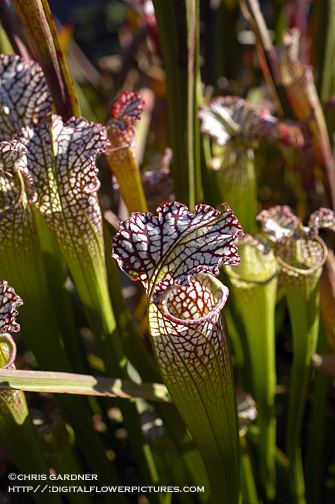
White Top Pitcher Plant 'Tarnok'


White Top Pitcher Plant
Sarracenia leucophylla 'Tarnok'
(sar-uh-SEN-ee-uh) (lou-ko-FIE-la)

This is an interesting cultivar of White Top Pitcher Plant introduced by the Atlanta Botanical Garden. My Pitcher Plants failed a couple of winters ago when it was really cold here. I had enjoyed them for several years but they are listed as a USDA Zone 7. We are right on the edge of Zone 6 and 7 here. You can get away with growing some Zone 7 plants but they usually succumb to our sometimes very cold winters. If you can plant them in a protected location you'll have a better chance for success. This was growing in the Rock Garden at the New York Botanical Garden with several other species and cultivars of Pitcher Plants. In the Spring this one has a beautiful red flower that is considered double. The color of the pitcher is outstanding with the whites really white and deep crimson veining. According to some websites I visited this Pitcher can get up to 3 feet tall! The ones at the NYBG were more like 15 inches tall, which made them a lot taller than most of the types in the collection. If you have a boggy area and mild winters you should try Pitcher Plants, they always seem to cause a sensation in the garden.

Friday, November 10, 2006

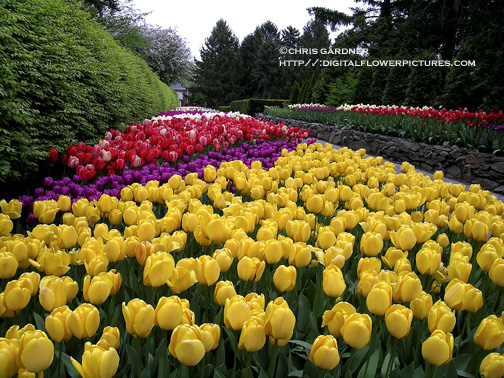
Big Tulip Planting


I am posting this picture in honor of the 400 tulips I have to plant this weekend. I am not really looking forward to it but it all becomes worth it in the spring. I have selected red and white Darwin tulips. ‘Apeldoorn’ is the red and for some reason the ‘Ivory Floradale’ white ones were a lot more expensive. I like Darwin tulips for a couple of reasons. First, they seem to have some of the largest flowers and second ,they are very good about coming back every year. That makes them particularly good naturalizers. I have to go sharpen up my trowel now. Actually I will hopefully be using an electric drill and auger bit but you can’t always count on that.

Thursday, November 09, 2006

Burning Bush (Euonymus alatus)

Photobucket - Video and Image Hosting

Burning Bush
Euonymus alatus
(yoo-ON-ih-mus) (a-LAY-tus)

This isn't actually a photograph but a botanical scan. I made it on my all-in-one HP 1610. This is from last fall and it kind of confirmed my feeling that the colors weren't as nice this year. The shrub is in my yard and it is nowhere near this color this fall. I don't recommend this plant as it is considered invasive. It seeds all over the woods here in Connecticut. A couple of large nurseries don't even sell it anymore since it is considered invasive. It can be nice enough in the garden. It does get fairly large if the conditions are right. If you have to use it the Compact form is better for the garden. The best fall color is in full sun. The winged bark can be interesting in the winter. I have taken to hard pruning on the plants that I manage. Reducing it in half is what I strive for and sometimes even a little more. This is especially true on some of the specimens that are in foundation plantings and around walks and borders. A couple of the cultivars I have been growing are Euonymus alatus 'Rudy Haag' a very interesting dwarf form and the rare 'Monstrosus' which has large wings on the stems. The Spindle trees are a different species but are interesting plants and are not too common.

I didn't have any time to scan any foliage this fall. I noticed the Bradford Pears are still hanging in there so maybe I will try and get a branch from there. Scanning is fun because you never know what you are going to get. One trick I have learned is not to press the foliage down with the top. I usually use a piece of white paper placed on the top. That gives it some nice shadows.

We got 2.5 inches (6+ cm., I think) of rain here yesterday. I am sure it did some damage as it was really raining hard for a long time. I guess it will test some of the drainage we recently installed.

(Syn.: Cork Bush, Winged Euonymus, Winged Spindletree, Celastrus alatus)

Wednesday, November 08, 2006

Avalanche Birch (Betula x 'Avalzam')


Avalanche Birch
Betula x 'Avalzam'
(BET-yoo-luh)

This White Birch was growing in the Rock Garden at the New York Botanical Garden. Of the 120 plus plants I have researched for this blog this is the only one that the species was unknown. I saw it listed as European White Birch, Paper Birch and Asian Birch. The best information came from: http://members.tripod.com/~Hatch_L/betu77.html
(Sorry but I still haven’t figured out how to put a clickable link in these posts.) I found that website an excellent source for Betula information. Anyway, it says Storrison-Harrison Nursery brought the tree to the US from Japan in the 1930's. It also said the that it gets 50 feet tall and 30 feet wide, which sounds about right for the tree I saw. It is considered to have higher than average resistance to Bronze Birch Borer. I gave up on White Birch a while ago. I won’t plant it unless the customer ‘has’ to have it. There are just too many cultural problems associated with it. I did recently plant some Purple Leaf White Birch in a purple garden I built. They get treated with Merit every year. I will always try and plant a River Birch these days although if the opportunity arose to use a White Birch I would probably chose this one. The bark was white but had some peeling spots that showed some pinkish underneath. You can tell its getting late in the season when I am shooting pictures of bark.

Tuesday, November 07, 2006

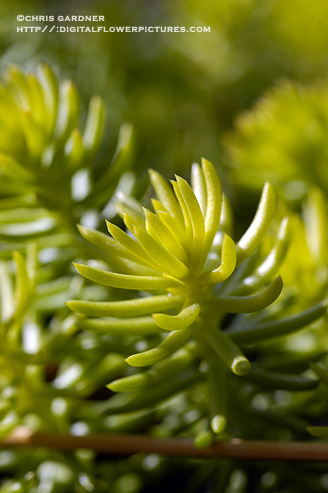
Angelina Stonecrop (Sedum rupestre ’Angelina’ )


Angelina Stonecrop
Sedum rupestre ’Angelina’
(SEE-dum) (rue-PES-tree)

This picture was taken at Wave Hill Gardens in the Bronx. The plant was gorgeous, a real splash of color. I think it would mix well with dark colored foliage plants. Sedums can be a fast spreader so you have to watch it. It is easy to root or new plants can be gained by division. Sedums like full sun and well drained soil. I often plant the low growing Sedums in cracks in garden paths or along the edge of stonework. That shows they can grow in some pretty crummy spots.

I started a new job on Thursday. It is a garden that I have been working on a long time and everything in the front foundation planting is wildly overgrown. I have to move about 12 five foot by five foot Azaleas and assorted other plants. Its hard work but looks a lot nicer when the plants are pulled apart. I am trying to resist running out and getting some new plants for some of the spaces I have made.

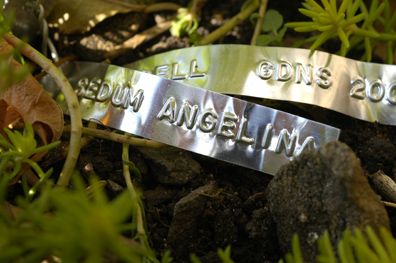
I have been keeping track of what I have been shooting by taking a picture of the plant sign or tag. I used to write them down until I got the D70s and it writes all over the card. The pictures are often out of order. I found this to be a much easier way to remember the plants name.

Monday, November 06, 2006

Cranesbill (Geranium ‘Rozanne’)


Cranesbill
Geranium ‘Rozanne’
(jer-AY-nee-um)

This Geranium has been a pleasure in the garden. It came out with a heavy bloom in the late Spring and during the summer I sheared it back hard because it was looking a little scruffy and it rewarded me with a whole new wave of blooms. It has even made it through a few frosts. Mine are planted in a part shade woodland garden and they love it. Its flower is a most lovely color blue that is bold but not overpowering. It forms a small clump about 18” tall and spreads fast but is easily controllable. This is considered to be a true Geranium. Not to be confused with the annual Pelargoniums. It even has a bit of red fall color this time of year. This 2001 hybrid of G. himalayense x G. wallichianum 'Buxton's Variety' has some of the prettiest color I have seen. I have been growing several other cultivars for years and these are a true perennial.

(Syn.: 'Gerwat')

Sunday, November 05, 2006

Birch Bark Cherry (Prunus serrula)


Birch Bark Cherry
Prunus serrula
(PROO-nus)

Yesterday I had to clear out of here. There was some construction going on at the house and thankfully I wasn’t involved in any of the decisions so I slipped down to the Bronx and the New York Botanical Garden. I went in the afternoon, which was totally different, then my usual morning visits. The gardens were beautiful and I always get a special feeling when I go into the garden. They still had a lot of foliage left compared to Connecticut. I guess that 50 miles makes a big difference. I visited the Enid A. Haupt Conservatory and they were still tearing down some of the Chihuly show. I pretty much had the place to myself. I got a couple of nice pictures of the tropical before moving on to the Ladies Border and garden in front of the Conservatory. There were still quite a few flowers left. I then headed over to the Rock Garden.

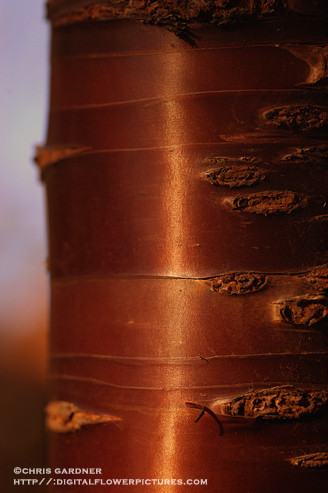
The Rock Garden is a truly amazing place. I am always in awe of the stuff I see in there. The Birch Bark Cherry was nicely highlighted by the setting sun. The bark is outstanding on this tree. I am not sure why you don’t see more often. It stays small (for a Cherry) and the white flowers are outstanding. It is has good fall color also. The bark has a metallic appearance when the sun is shining on it.

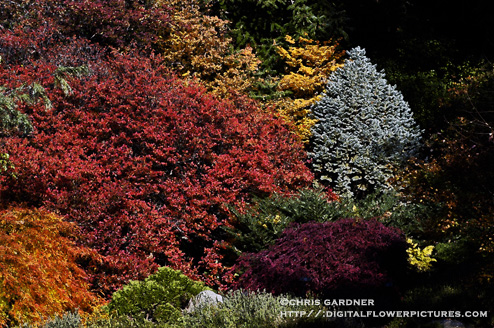
I saw one scene in the Rock Garden that pretty much struck me dumb when I came around the corner. It certainly was some of the best fall foliage I saw this year. I took this picture but it didn’t come out very well. As I was standing there with my puny digital camera I knew it could never capture all the color, especially without a tripod. It is one of the few times recently that I longed for a film camera. I ran this photo through the watercolor filter in PS because it was a little soft. The multi-layering of the different colors and the touch of evergreen were just right. The Rock Garden is always full of surprises and it didn’t disappoint.

(Syn.: Paper-bark Cherry, Tibetan Cherry)

Friday, November 03, 2006

Chinese Mantid (Tenodera aridifolia sinensis)


Chinese Mantid
Tenodera aridifolia sinensis

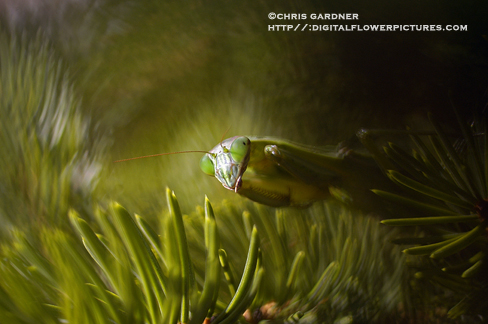
I saw this Praying Mantis climbing on the Tiger-tail Spruce (Picea torana) I was photographing. I had taken a couple of pictures before I realized it was in there. It actually gave me a bit of a start and I quickly looked around but nobody had seen me jump. It sure is a fascinating insect and it was a little scary trying to real close to. I saw a website where a Praying Mantis had caught and eaten a Hummingbird and I would probably wouldn’t have believed it but they had pictures. This individual stayed calm and posed for about 30 shots. It seemed to be making kind of an odd chirping noise.

I hadn’t seen a Praying Mantis in several years until about 2 weeks ago I saw one at work but of course didn’t have my camera. Then I saw this one and was able to take a picture of one for the first time. It was a little difficult because he was inside the Spruce. I think that is where the weird lighting came from.

Thursday, November 02, 2006

Dwarf Redleaf Barberry 'Crimson Pygmy'


Dwarf Redleaf Barberry
Berberis thunbergii var. atropurpurea 'Crimson Pygmy'
(BEAR-ber-is)

I know a lot of people don’t like Barberry. I find it an attractive plant that can be useful. The ‘Crimson Pygmy’ Barberry is a dwarf mounding very colorful shrub. It is an easy way to get color throughout the season. The dark foliage is a nice foil for flowers and grey foliaged plants. If this plant is really happy it can grow a little bigger than what is advertised. Some hard pruning usually brings it back into shape. I also love Golden Barberry. I usually try and slip a couple of Barberry in because they are easy to grow. Most have this nice fall color and the newly emerging foliage is usually a very nice color. The only type I have had seeding is the upright columnar type called ‘Hellmond’s Pillar’. That is a nice type for a tight upright foliage accent. I still haven’t decided if the seedlings are coming true (only time will tell but the color looks good). Among some of my other favorite Barberry cultivars are:

‘Rosy Glow’, upright variegated form. Needs full sun.
'Bonanza Gold' and 'Gold Nugget' are superior gold foliage selections.
‘Ruby Carousel’ is a nice upright red.
'Bagatelle' is a very slow growing red. Much slower and smaller than ‘Crimson Pygmy’.
‘Angel Ring’ is a dense upright red form with a light green margin on the leaves.

These are just a few of the ones available! I just planted “Royal Burgundy’ and ‘Concorde’ so I will let you know how they turn out. I don’t like the Green Barberry that seeds all over the place and is, in my opinion, of little horticultural value. I remove it whenever I see it in the garden. Some people consider Barberry to be an invasive plant but that has not been my experience with the garden types.

This is a shot of ‘Ruby Carousel’ I took last year.

Wednesday, November 01, 2006

Autumn Crocus (Crocus goulimyi)


Autumn Crocus
Crocus goulimyi
(KROH-kus) (goul-LIM-yee-eye)

This was growing in the Alpine house at Wave Hill. It looked so delicate. I am fimiliar with the False Autumn Crocus (Colchicum speciosum) but I hadn’t seen this native of Southern Greece before. The bulbs were planted in a small clay pot that was sunk in gravel. I looked them up on the net and found out that they like to grow over limestone. They are often found growing in old abandoned fig and olive orchards. I couldn’t find how hardy these are but one site did say they will grow in the UK with winter protection. I guess that leaves growing them in Connecticut pretty much out.


I am going to be planting quite a few bulbs next week. I have order a couple hundred of mixed Muscari, some Daffodils, 200 Giant Crocus, Globemaster Allium and even a few Tulips. I ordered most of the stuff from White Flower Farm in Litchfield, Connecticut. They didn’t have many Tulips left but I was able to snag 24 really nice ones. The customer wanted something funky and I ordered some weird ones. This surprised me because I though she was much more of a traditionalist. It is funny because I hadn’t planted any Tulips in years because of the deer problem. Boy do the deer ever love Tulips. I once had them breaking down some temporary fencing that I put up to eat every last bulb. It is a luxury to have two fenced in yards to work in. I am planting 350 Tulips at another house with some Azaleas!

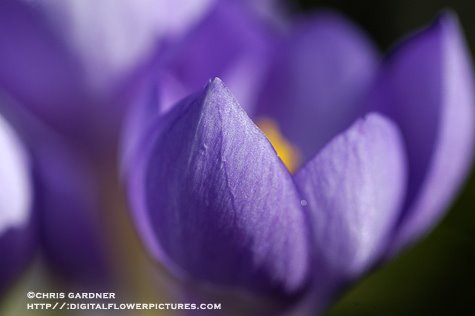
Here is an abstract of the Crocus.

Tuesday, October 31, 2006

Squash and Pumpkins


When fall rolls around every year I always have high hopes of capturing some images that reflect the colors of the season. I can never seem to get it right. Someday I know I will take a nice picture of some fall foliage. This picture was taken at a roadside garden center. I neglected to take the name down for the squash or the pumpkins. I couldn’t find them when I searched the web so they will remain nameless. I am not even sure the orange ones are pumpkins as this place had some very unusual gourds, squash and pumpkins. Whatever they are the color was beautiful and I thought it contrasted nicely with the hay and green squash. Happy Halloween.

Monday, October 30, 2006

Levant Cotton


Levant Cotton
Gossypium herbaceum nigra ‘Black Cotton’
(gos-SIP-ee-um) (her-buh-KEE-um)

Well I finally found a plant that pretty much stumped Google. There really wasn’t much information on it. I took some pictures of this plant at Pound Ridge Nurseries in Westchester County. It is a fun place as they carry a lot of different unusual plants. I was immediately drawn to the color of this plant. It was sitting on a ‘sold’ cart with some yellow and pink mums. It was hugely effective against the colors. This was the first time I had seen this plant and the little information I could find stated the flowers and cotton bolls (seedpods) are very nice. Come to think of it there were a few unopened seedpods on these plants. They were wonderfully weird. I didn’t see any cotton though. The foliage alone is worth growing this plant. Since this is a tender perennial that thrives in full sun and humidity I am sure we will be seeing a lot more of it.


I was going through my camera bag and found an old memory card with pictures from February. We packed up the cameras, computers and dogs and spent the whole month on Cudjoe Key, which is about 28 miles from Key West. I have some other pictures on the Florida Keys section of Digital Flower Pictures.com. Here is the best photo of the bunch that was on the card. It is a night shot from the historic Harbor walk. It was a 30 second exposure at F13. It was hard to take long exposures in the Keys because of the wind. It is always blowing. I used the D70s kit lens (Nikkor DX AF-S 18-70mm f/3.5-4.5G ED) at a focal length of 28 mm. It is a pretty good lens but I don’t use it that often.

Sunday, October 29, 2006


Hardy Chrysanthemum
Chrysanthemum 'Sheffield'
(kris-AN-the-mum)

In a way this maybe the most beautiful flower I saw growing this fall. This photo doesn’t really do it justice. You don’t see Sheffield Mums as often as you should. They are not like the showy cultivars that are available these days, it is a much more dignified and refined plant. Maybe it is because the price is high. They wanted about $20 for a 6-inch pot at the nursery this picture was taken. I saw them for $17.99 at another nursery for a decent sized plant. In my infinite wisdom I thought I could get them cheaper and I should have just bought the larger ones. When I went back to buy them they were gone.

I decided to look up a little information on Chrysanthemums. I have been planting them for years and really didn’t have much knowledge about the plant itself. According to Wikipedia the flower has been grown in China since the 15th century BC and it was exported to Japan in the 8th century. The plant made it to the West in the 17th century. I tried to look up some info on Sheffield Mums and found a lot of confusion. The nomenclature of the Chrysanthemums seems to be in a bit of a flux and what I learned seems no longer to be true so I won’t go into that here. What is important is this is a beautiful hardy perennial that will bring years of enjoyment and brighten up your fall garden for years to come.

(syn.: Dendranthema ‘Hillside Pink Sheffield’)

Saturday, October 28, 2006

Happy Halloween


Happy Halloween everyone! The weather is terrible out today so I am catching up on some paperwork and correspondence. I have been planning a road trip to California for this winter and there are a lot of decisions to make. I don’t even want to venture out tomorrow as the flooding rains and high winds surely raised some havoc in the gardens. I guess we can say goodbye to the fall foliage around here. Whatever didn’t fall has been shredded.

Hopefully the big planting job we did in Westchester County is okay but I would rather have any problems come up now. There are much easier to fix now. Everything maybe fine I won’t know until I get there on Monday. I have been doing a lot of gardening work in Westchester and it is a great place to work. It does seem subject to some wild weather though.

Friday, October 27, 2006

Magnolia Seeds


This Magnolia fruit was at Wave Hill. I never knew that Magnolia had what is considered to be primitive flowers. I guess you could call them classic. I am already pining for the first spring flowers. I know they are still months away. Magnolias always remind me of spring although they often bloom sporadically during the summer. They have a couple nice seasons actually, with good yellow fall color and a distinct winter branching pattern. The buds are nice during the winter, also. I am not sure what type of Magnolia this is but I haven’t seen it in Connecticut. So I am thinking that it would not be hardy here.

I am happy it is Friday although tomorrow is supposed to be crummy around here. 1 to 2 inches of rain are expected and winds up to 50 miles per hour. Sounds like a good day to get caught up around the office.

Thursday, October 26, 2006

Himalayan Ivy Vine


Himalayan Ivy Vine
Hedera nepalensis var sinensis ‘Marble Dragon’
(HED-er-uh) (nap-ahl-EN-sis)

I am glad this picture came out with kind of a soft focus because that is exactly the effect this ivy had. It was climbing up the side of the Alpine House (that is what I call it anyway) at Wave Hill Garden in the Bronx. When I Googled this plant there wasn’t too much information. The older leaves had various green markings and tones to them but it was the gold new growth that attracted me. The vines had crawled up the side of the wall and spilled onto the top of a window sill.

I have almost all my plants in the ground but I haven’t been able to locate a Bush Clover (Lespedeza thunbergii) locally. I guess I am going to have to mail order for it.

Wednesday, October 25, 2006

Southern Maidenhair Fern (Adiantum capillus-veneris)


Southern Maidenhair Fern
Adiantum capillus-veneris
(ad-ee-AN-tum) (KAP-il-iss VEN-er-iss)
Pteridaceae

I saw this dainty beauty in the greenhouse at the Bartlett Arboretum on Sunday. I have been growing a little patch of Northern Maidenhair Fern (Adiantum pedatum) and that plant looks almost coarse compared to the Southern Maidenhair. A. pedatum isn’t really coarse, it is a beautiful groundcover plant that is easy to grow. I think the Southern type is hardy to USDA Zone 7 so that is why it was growing indoors in Stamford. I love the soft green foliage contrasted with the wiry black stems. This plant has been used medicinally since ancient times. I am going to keep my eye out for this plant if I head down South this winter.


(Synonyms: Venus-hair fern, True Maidenhair, Capillaire commun, Capillaire de Montpellier. Hair of Venus)

Tuesday, October 24, 2006

Pearly Everlasting (Anaphalis triplinervis)


Pearly Everlasting
Anaphalis triplinervis
(a-NAF-uh-lus) (trip-lee-ner-viss)

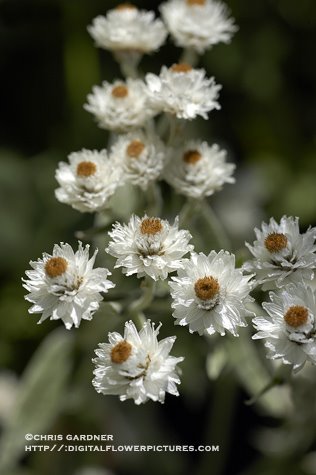
This was a cute little plant that I saw at Wave Hill. It was intermingling with several other plants out in front of the Conservatory. It looked like it would be fun for the fall border. It has a strange crossover branching pattern. The foliage is a nice color gray. Since it is native to the Himalayas it is hardy to USDA Zone 3.

The gardens at Wave Hill were full of a lot of great botanical surprises. It is always nice to visit there. It was really windy but I managed a few snaps in between giant gusts. Yesterday, I planted most of the large trees in my new project. Only 2 more to go but they are probably the worst, they are two huge 5 foot across Globe Blue Spruce. They really look a lot bigger now that they are next to the front door then they did at the nursery. I am sure they will draw some blood when we are planting them. After that it is all container stuff, which should be easy. I will try and post a picture of the garden when I am finished.

In the garden, Autumn is, indeed the crowning glory of the year, bringing us the fruition of months of thought and care and toil. And at no season, safe perhaps in Daffodil time, do we get such superb color effects as from August to November.
Rose G. Kingsley, The Autumn Garden, 1905

Monday, October 23, 2006

Autumn Snakeroot (Actaea simplex 'Hillside Black Beauty' )


Autumn Snakeroot
Actaea simplex 'Hillside Black Beauty' (Atropurpurea Group)
(ak-TEE-uh) (SIM-plecks)
Ranunculaceae

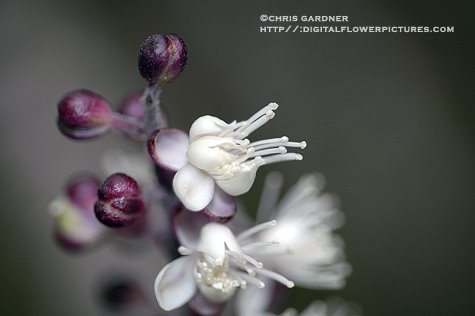
This plant is just stunning in bloom. I have been trying to get a good picture of it for weeks but I really missed the full bloom stage of my little patch. I was happy to see it at the Bartlett Arboretum on Sunday and it was just starting to bloom. The conditions for flower photography kind of stunk as there was a stiff breeze and even though it was one o’clock in the afternoon it was drearily dark out. I tried a couple of settings and ended up using the auto mode of the camera by accident. I have been manually focusing 90% of my macros and I decided to use the auto-focus. It came out fairly well considering I didn’t know what I was doing. The fragrance of the flowers, it was a stand of about 8 plants, was very pleasing. So was the color of the flowers and buds. The foliage, which a lot of people rave about, was a little ratty, just like mine at home. I guess if it gets too much sun or dries out the foliage isn’t great. They always seem to flower nicely though. It is sometimes a little slow to emerge in the spring but it has the rest of the season to develop. Just a little warning this is an expensive, hard to find and slow to develop plant. It is worth taking the time for.

(Synonyms: Black Cohosh, Bugbane, Cimicifuga racemosa 'Purpurea')

Sunday, October 22, 2006

Mountain Fleece Flower (Persicaria amplexicaulis 'Firetail')


Mountain Fleece Flower
Persicaria amplexicaulis 'Firetail'
(per-sih-KAR-ee-uh) (am-pleks-ih-KAW-liss)
Polygonaceae

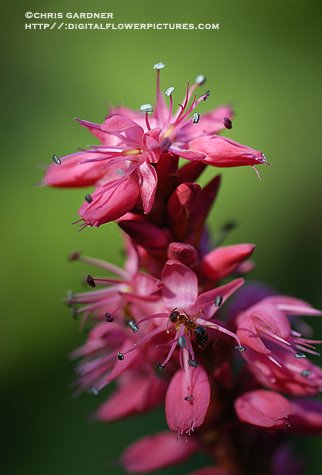
This is an interesting perennial that you don’t see very often. Developed by Blooms of Bressingham this hardy plant is a slow spreader. I wouldn’t recommend it for the small garden but a nice patch in the larger garden or border is nice. My experience has been that it grows to about 3 feet and my 6 plants have become about 6 feet across after several years. The flower color is gorgeous, a really nice Crimson Red. It can tolerate part shade but looks better in sun. I have had a little problem with some rusty fungus on the leaves but it only seems to develop when the conditions are just right. There is a new cultivar out called ‘Taurus’ (Persicaria amplexicaulis 'Taurus'), which looks even better.

I had a few appointments this morning and then snuck off to the Bartlett Arboretum in Stamford. I am working down the street and will probably try to go at least one more time. The gardens were nice. A lot of fall colors and quite a few flowers were out. I meant to stay about a half an hour but actually was there for 2 hours.

(Synonyms: Polygonum amplexicaule, Bistorta amplexicaulis)

Saturday, October 21, 2006

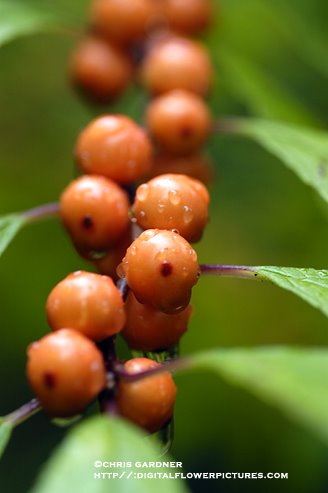
Winter Gold Winterberry Holly (Ilex verticillata 'Winter Gold')


Winter Gold Winterberry Holly
Ilex verticillata 'Winter Gold'
(EYE-lecks) (ver-ti-si-LAH-tuh)

I bought his plant as ‘Winter Gold’ although my friend swears it is sub-species of Winterberry that I have forgotten the name of. Whatever it is a great plant and adds a little zip to the Winterberry collection at one of the large gardens I take of. This plant is easy to grow and will tolerate moist to wet conditions. Most people’s first guess would not be holly because it is deciduous and spineless. I have been keeping ‘Winter Gold’ at about 6 feet though it seems to want to get a little taller. There is always a good crop of berries and the foliage remains clean throughout the season. I took pictures of some of the other Winterberry Holly that I will be posting next week.

I have to go out and see what last night’s high winds did to the gardens. Hopefully not too much but 50 miles per hour with a leaf load may have been too much. I am not sure why some of the color washes out on Blogger but these berries are a darker shade of orange!

(Synonyms: Black Alder, Michigan holly, Common Winterberry)

Friday, October 20, 2006

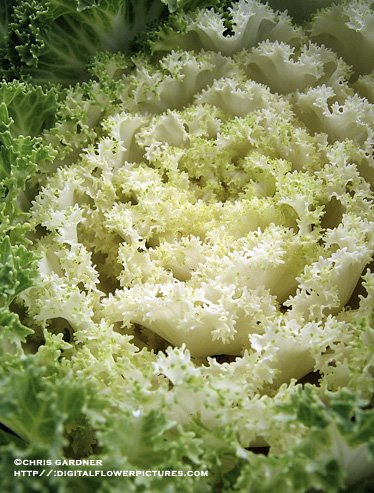
Curly Leaf Kale (Brassica oleracea 'Chidori White')


Curly Leaf Kale
Brassica oleracea 'Chidori White'
(BRAS-ee-kuh)

I was impressed by the amount of different varieties of Ornamental Cabbage and Kale I saw at the farm markets I visited. Each place had 5 or 6 types. Peacock, Emperor and Dynasty were a few of the ones I saw. They also had a nice selection of odd pumpkins and gourds. I guess everything is going to towards having the newest and latest types of plants. This particular Ornamental Kale was nice and compact with distinct areas of white and green.

Just a short post as I agonize over the late bulb order I have to place tomorrow. You have to pick out substitutions on almost everything because there are people that are much better organized that have already ordered.

I took this picture with my back up, back up camera a Nikon 5400. It is a nice little point and shoot. I like carrying a point and shoot and just firing away on Aperture priority mode. Most people don’t even know you are taking pictures.

Synonyms: (Flowering Cabbage, Ornamental Kale, Collard, Cole)

Thursday, October 19, 2006

Japanese Anemone


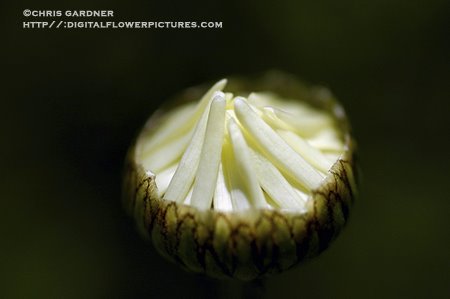
The Japanese Anemones continue blooming very strong. I was at a garden today and several plants I had put in August were in flower. It was about the last plant that was really out in the border. Most everything including the Purple Dome Aster had a few stray flowers and really bad foliage. So these are a very nice touch to the fall garden. Sometimes the foliage has a little fungus this time of year but the flowers are held up high enough that the foliage is really not that prominent. Somebody told me that they love bud pictures and earlier this year I shot some pictures for her. I was pretty hooked, as the buds can be more beautiful then the flowers sometimes. Anyway it opened a whole new angle of flower photography for me. I haven’t been concentrating on it but I will stop and take a look if I pass a patch of flowers that are only in bud.

“I saw old Autumn in the misty morn stand shadowless like silence, listening to silence.”
Thomas Hood

Here is another bud picture I took earlier this year:

Wednesday, October 18, 2006

Coralberry (Symphoricarpos x doorenbosii 'Amethyst')


Coralberry
Symphoricarpos x doorenbosii 'Amethyst'
(sim-for-ee-KAR-poss) (door-en-BOH-see-eye)

The color of the berries made me take a look at this plant at the nursery. This one isn’t quite ripe as the color deepens a bit. The pastel color is very effective and the plant looked much better than the Coralberry I have been growing which is actually a different species (Symphoricarpos orbiculatus). This hybrid is supposed to be much better branching and fruiting than some of its more scruffy cousins. It was developed for the floral industry in Germany. I have to rate this one for the more advanced gardeners or people with a large woodland garden. It does seem to have some deer resistance. My Coralberry was planted in sun and now is shaded by the Tupelo Tree (Nyssa sylvatica) I planted years ago. It has finally turned into a nice specimen. The fellow I bought it from said “it’s the nicest one I have seen”, and I thought ‘yeah, sure’. I must say after taking several years to really get going the tree does have the most fabulous fall color.

It looks like peak foliage color around here this weekend. The leaves have not been their usual brilliant selves. This rain we are getting is sure going to knock a lot of the leaves down.

Synonyms: 'Kordes', Snowberry

Tuesday, October 17, 2006

Double Shasta Daisy (Leucanthemum x superbum 'Summer Snowball')


Double Shasta Daisy
Leucanthemum x superbum 'Summer Snowball'
(lew-KANTH-ih-mum) (soo-PER-bum)

I have seen some interesting variations of the Shasta Daisy. This one is one of the strangest, but not in a bad way. I really had no idea what it was from a distance. The flower is a little smaller than a tennis ball and really has the appearance of a garden mum or even a dahlia. Daisies are fun. I used to think them as a bit pedestrian but they are far from that. I am using Shasta Daisy in the garden I am installing this week. When I drove in the driveway to look at the job the first thing I thought of was daises. I usually go with that kind of hunch. I ended up getting ‘Becky’ which was selected as Perennial of the Year in 2003 by The Perennial Plant Association. It is a little taller than I would have liked but there was one blooming in the nursery block and the flower looked quite large. The plants are three-gallon containers that look like they could be divided before planting. The plants looked healthy and ready for next year, which is why I got them. I haven’t grown ‘Summer Snowball’ but would give it a try. If they hadn’t been so expensive I would have got a couple on Sunday. The pure white double flowers are worth having if only for the novelty of it.

(Synonym: Chrysanthemum x superbum, Chrysanthemum maximum)

Monday, October 16, 2006

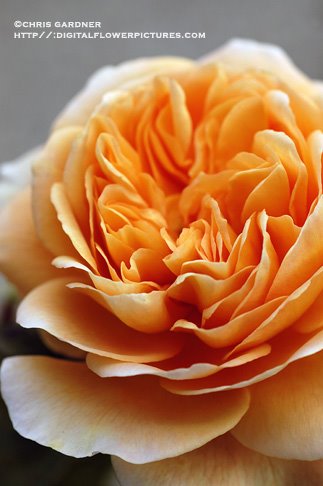
English Rose (Rosa 'Crown Princess Margareta')


English Rose
Rosa 'Crown Princess Margareta'

The color of this rose is superb. The way the petals are formed is very interesting. Of all the David Austin Roses I have seen I think I like this one the best. Named after the granddaughter of Queen Victoria, Crown Princess Margareta of Sweden, was an avid and accomplished gardener. Since it was late in the season the plant didn’t look the greatest but it was a bushy shrub type about 5 feet tall. The color really matches the season.